
Pitra Dosh Guide
How Pitra Dosh in Kundli Affects Marriage, Finance, and Health
A complete and practical guide to understanding Pitra Dosh in kundli, its possible impact on relationships, money flow, and wellbeing, and how to handle it with balanced remedies and better life decisions.
Introduction
In many families, Pitra Dosh is discussed only when life feels blocked from multiple directions at once. A person may see recurring relationship issues, unstable income, repeated health stress, and unexplained family tension. In such moments, elders often say there is an ancestral imbalance in the chart. Whether one sees this spiritually or psychologically, the lived experience is similar: the person feels they are carrying a burden bigger than their personal effort.
This article is written for readers who want clarity instead of fear. It explains how Pitra Dosh is generally interpreted in Vedic astrology, why it may influence marriage, finance, and health, and how to respond in a practical way. The goal is not superstition. The goal is awareness, better decisions, and long-term stability.
Most importantly, no single dosha defines your destiny. A horoscope is a system of tendencies, not a punishment note. Strong houses, supportive dasha periods, conscious choices, healthy boundaries, and disciplined remedies can reduce difficult patterns significantly. When understood correctly, even a challenging chart becomes a map for healing.
What is Pitra Dosh?
Pitra Dosh is traditionally linked to unresolved ancestral karma. In simple terms, it indicates that some family-line energy remains unsettled and may express itself through descendants as repeated struggle, delay, emotional heaviness, or instability in key life areas. This does not mean the ancestors are 'angry' in a simplistic sense. It often means there is unfinished responsibility, neglected duty, or inherited imbalance seeking correction.
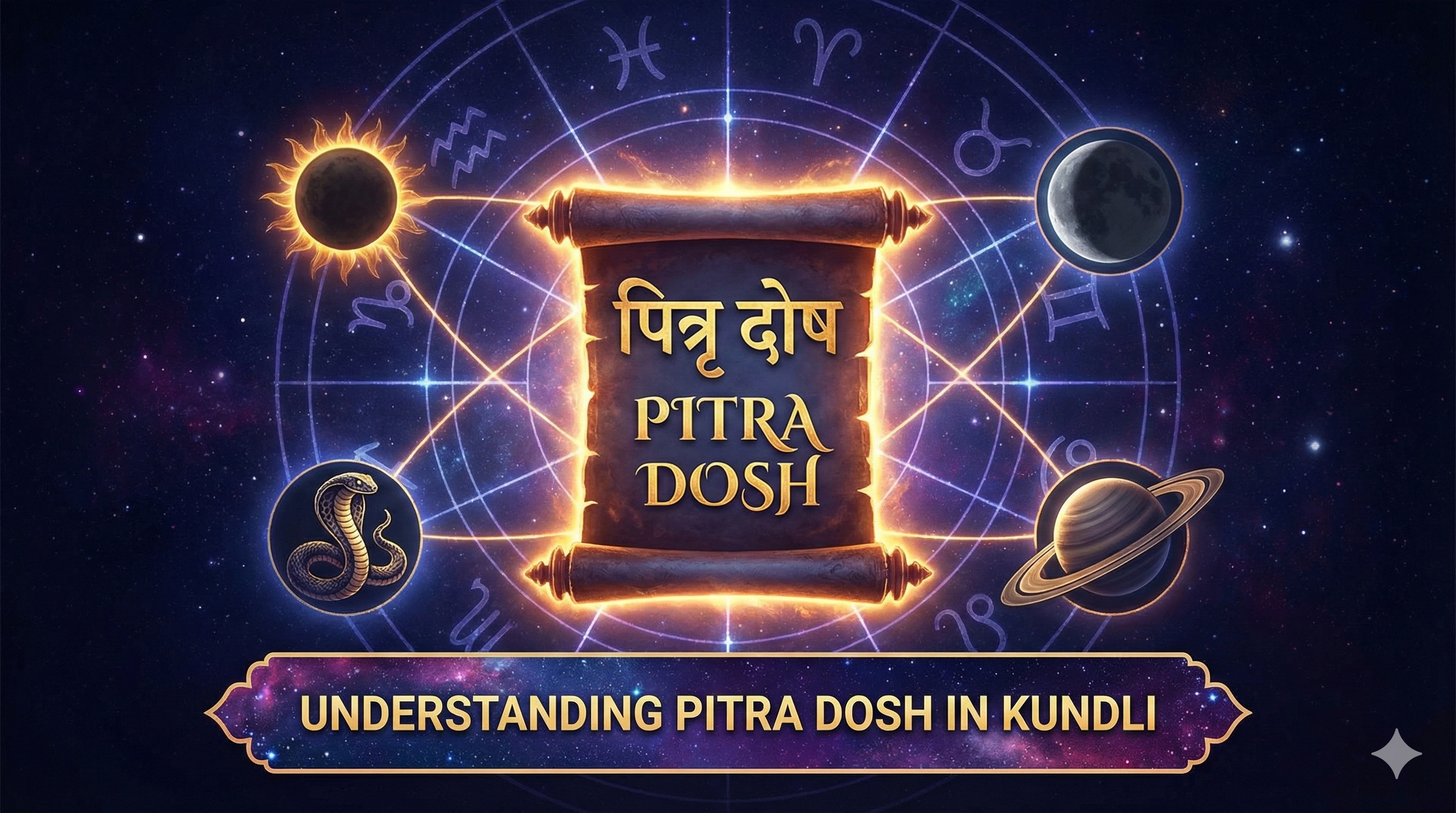
In astrology, Pitra Dosh is not a single fixed formula. Different schools identify it through combinations involving the Sun, Moon, Rahu, Ketu, Saturn, and houses linked with lineage, karma, and family legacy. The ninth house (father, dharma, blessings), second house (family line), and fifth house (purva punya and continuation of lineage) are frequently examined.
People often misunderstand Pitra Dosh as a life sentence. That is incorrect. It is better understood as a karmic indicator showing where life asks for maturity. If the native accepts discipline, respects family responsibilities, resolves bitterness, and follows meaningful remedies, the same chart can produce growth, wisdom, and improved outcomes over time.
How Pitra Dosh is Identified in Kundli
Astrologers usually assess Pitra Dosh through a pattern-based reading, not one isolated placement. Common observations include strong afflictions to the Sun or Moon, Rahu-Ketu influence on the ninth house axis, heavy Saturn pressure on lineage-related houses, or repeated karmic signatures across divisional charts. The final judgment depends on strength, aspects, sign dignity, and running planetary periods.
A technically correct reading also checks cancellation factors. If benefic Jupiter supports the ninth house, if the lagna and lagnesh are strong, or if favorable dasha periods are active, difficult indications can soften. This is why two people with similar combinations can have very different life results. Context matters more than labels.
Accurate birth time is critical. A small time error can shift house positions and produce a wrong conclusion. Before accepting any fear-based statement, one should verify birth details and seek a balanced reading that includes both challenges and strengths. The right reading is practical, specific, and never designed to scare.
Marriage Impact: The Core Pattern
When Pitra Dosh affects marriage-related factors, the first visible sign is often emotional misalignment. The person may deeply desire commitment but repeatedly attract emotionally unavailable partners, delayed proposals, unclear intentions, or sudden breakdowns before finalization. Sometimes the issue is not lack of love but lack of timing and clarity.
In married life, patterns may include recurring argument loops, mutual blame, communication shutdown, or unresolved insecurity. These patterns are often intensified during unfavorable dasha or transit periods. The relationship can feel heavier than normal because old family scripts unconsciously enter daily behavior.
However, this does not mean marriage cannot succeed. It means the couple must build structure: emotional transparency, conflict rules, financial clarity, and mutual respect for boundaries. Couples who treat marriage as teamwork rather than ego competition usually reduce the dosha expression significantly.
Delay, Misunderstanding, and Emotional Distance
One of the most common complaints is delayed marriage despite many efforts. Meetings happen, discussions move forward, and then something collapses at the final stage. In astrology, this can occur when lineage-related karma intersects with relationship houses. In psychology, it can also reflect inherited fear of rejection, control, or instability.
After marriage, some people report feeling unseen or unsupported even when no major external problem exists. Emotional language may be mismatched. One partner seeks reassurance; the other withdraws. Over time, silence becomes distance, and distance becomes resentment. Without intervention, this cycle can damage trust.
The solution is consistent emotional hygiene: weekly check-ins, respectful disagreement rules, family boundary alignment, and active listening. If needed, counseling can be combined with spiritual remedies. When the relationship is handled with maturity, the same chart that once showed friction can slowly begin to show loyalty and endurance.
In-Law and Family Interference Dynamics
Pitra Dosh discussions often involve family systems, so in-law influence becomes an important factor. In some cases, the couple itself is compatible, but unresolved tensions between families create pressure. Comparison, control, property discussions, and emotional politics can trigger repeated friction.
If boundaries are weak, small issues become symbolic battles. A disagreement about living arrangement or finances gets interpreted as respect or disrespect to the entire lineage. This magnification can drain the marriage and create chronic anxiety for both partners.
A practical approach is to define clear marital priorities: what decisions belong to the couple, what inputs from elders are welcome, and where privacy begins. Respect for elders and healthy boundary-setting can coexist. This balance is often one of the most effective real-world remedies for lineage-linked disturbances.
Finance Impact: Why Money Feels Unstable
In financial matters, Pitra Dosh is often described as irregular flow rather than total absence of earning. The person may earn well in phases but face sudden disruptions: delayed payments, unexpected obligations, partnership losses, or repeated expenses that erase gains. This creates a feeling that money comes but does not stay.
Another pattern is blocked expansion. Opportunities appear, effort is high, but results remain underwhelming. The native may feel they are constantly fixing problems instead of building wealth. Over time, this can reduce confidence and increase risk-taking out of frustration.
The remedy framework here is practical discipline: emergency fund first, high-risk investments only with limits, debt control, transparent accounting, and long-term planning. Financial karma improves when spending becomes intentional and decisions are data-backed instead of emotion-driven.
Business, Job, and Asset Patterns
In business charts, lineage disturbances may show as unstable partnerships, trust deficits, frequent staff turnover, or legal/documentation delays. The person may have talent and market demand but still struggle with execution consistency. This is why process quality becomes more important than motivation alone.
For salaried professionals, patterns can include repeated friction with authority, delayed promotions, role uncertainty, or moving jobs without true growth. The lesson is usually around alignment: choosing environments that match temperament and values instead of chasing short-term status.
Asset-building may also feel delayed. Property decisions get postponed, family disputes complicate ownership, or timing repeatedly slips. A careful legal process, patient planning, and transparent family communication are essential. In many cases, once documentation discipline improves, the financial pressure starts to ease.
Debt Cycles, Legal Blocks, and Sudden Losses
Debt is one of the areas where fear grows quickly. Some natives enter cycles of borrowing to handle earlier borrowing, creating emotional and financial exhaustion. This may happen due to unstable cash flow, medical spending, business uncertainty, or family obligations.
Legal and compliance issues can add pressure: unclear contracts, property disputes, taxation mistakes, or oral agreements without documentation. These are not purely astrological problems; they are practical gaps that amplify vulnerability during difficult periods.
A realistic correction path includes debt hierarchy, strict repayment sequencing, compliance review, and no impulsive leverage. If money stress is severe, simplify lifestyle temporarily. The combination of disciplined action and consistent spiritual practice usually gives measurable relief within months.
Health Impact: Stress and Vitality
Health effects of Pitra Dosh are often indirect at first. The person may not have one dramatic diagnosis but may experience persistent fatigue, sleep disruption, anxiety spikes, low immunity phases, and psychosomatic discomfort. When emotional and financial stress combine, body resilience drops.
Many people ignore early signs because reports look normal initially. Yet the nervous system remains overactive. This chronic load can eventually contribute to blood pressure issues, digestive imbalance, headaches, hormonal irregularity, or inflammation patterns depending on constitution and lifestyle.
The key insight is that health repair must be proactive. Waiting for a crisis increases damage. Daily sleep timing, regular meals, hydration, movement, sunlight exposure, and stress regulation practices are non-negotiable. Astrology can point to vulnerable periods, but prevention must come from routine.
Mind-Body Signs Often Seen
Emotional symptoms may include unexplained heaviness, guilt without clear reason, overthinking, fear of failure, or recurring grief themes. These can feel like inherited emotional memory, especially when similar patterns are visible in the family history. Whether viewed spiritually or clinically, they deserve attention.
Body symptoms vary by individual but often include acidity, gut sensitivity, skin flare-ups during stress, migraine tendencies, low stamina, and inconsistent appetite. Some people feel better for a few weeks and then suddenly crash under emotional triggers.
A combined care model works best: medical checkups, evidence-based treatment, mental health support when required, and spiritual grounding for emotional resilience. Pitra Dosh should never be used to delay medical diagnosis. Spiritual remedies support recovery; they do not replace healthcare.
Family Karma and Repeating Patterns
A striking feature in many cases is repetition. Different family members experience similar themes in different forms: delayed marriage, unstable savings, conflict over inheritance, emotional distance from father figures, or chronic stress without closure. This repetition is why the dosha is linked with lineage memory.
Breaking repetition requires awareness plus new behavior. If previous generations avoided communication, the current generation must learn it. If secrecy caused financial damage, transparency must become policy. If unresolved resentment damaged relationships, forgiveness and boundary repair must be practiced consciously.
In this way, remedies become intergenerational healing. The person is not 'punished' by ancestry; they are invited to complete what remained incomplete. This mindset is empowering because it converts fear into responsibility and gives clear direction for action.
Astrological Remedies for Pitra Dosh
Traditional remedies vary by lineage and regional practice, but commonly include tarpan, shraddha (performed respectfully on appropriate dates), feeding needy people, serving elders, supporting cows or birds, and specific mantra japa under guidance. The spirit behind these remedies is gratitude, humility, and karmic balancing.
Some practitioners recommend Sunday discipline for Sun-related afflictions, ancestor remembrance rituals during Pitru Paksha, and donations linked to family karma correction. The value of any remedy depends on sincerity, consistency, and ethical conduct in daily life.
Avoid exploitative 'instant cure' claims. Real remedies are simple, repeatable, and character-building. If a ritual is performed but behavior remains dishonest, aggressive, or irresponsible, results usually remain weak. In Vedic logic, remedies work best when intention and action are aligned.
Practical Lifestyle Remedies
Along with spiritual methods, practical life corrections are essential. For marriage: communicate early, choose emotionally mature partners, set clear expectations, and avoid rushing under social pressure. For finance: automate savings, keep insurance active, avoid unverified partnerships, and track monthly cash flow.
For health: maintain sleep discipline, reduce processed food, manage stress daily, and complete preventive checkups. For family harmony: create respectful boundaries, avoid public conflict, and resolve property or money discussions through documentation instead of assumptions.
A strong remedy framework has three layers: spiritual grounding, practical systems, and emotional accountability. If all three are followed for a sustained period, the person usually experiences better stability even before the full astrological cycle changes.
Common Mistakes to Avoid
The first mistake is fear-based decision making. People sometimes reject suitable partners, quit stable jobs, or overspend on rituals because someone predicted extreme outcomes. Fear rarely improves karma; disciplined action does.
The second mistake is over-focusing on dosha while ignoring behavior. If anger, ego, secrecy, or poor financial planning continue, no external remedy can produce durable change. Charts indicate tendencies, but daily choices decide direction.
The third mistake is delaying professional support. Relationship counseling, legal advice, financial planning, and medical care should not be postponed. A balanced path combines spirituality with professional competence.
Practical Case Insights
Case pattern one: a couple with repeated engagement breaks stabilized after slowing the process, involving fewer decision-makers, and creating clear expectations. They also followed consistent ancestor-remembrance practices. The result was not instant, but clarity replaced panic within months.
Case pattern two: a business owner facing repeated cash disruptions moved to strict bookkeeping, reduced unsecured credit, and ended verbal-only partnerships. Alongside simple weekly remedies, financial leakage reduced and confidence improved.
Case pattern three: a person with chronic fatigue and anxiety accepted integrated care: medical evaluation, therapy, sleep discipline, and spiritual routine. As stress reduced, both relationship quality and work performance improved. These examples show that healing is practical, layered, and gradual.
FAQs
Q1. Does Pitra Dosh always destroy marriage? No. It may show delay or recurring friction, but conscious communication, compatible partner selection, and disciplined remedies can create a stable marriage.
Q2. Can Pitra Dosh cause financial poverty for life? Not necessarily. It often shows irregularity or repeated setbacks. With financial systems, legal clarity, and better timing, long-term stability is possible.
Q3. Is every health issue due to Pitra Dosh? No. Medical diagnosis must always come first. Astrology can indicate stress-prone periods, but treatment should follow clinical evidence.
Q4. How long do remedies take to show effect? It depends on chart strength, dasha, and consistency. Many people notice emotional and practical improvement within a few months of disciplined effort.
Q5. Should one fear Pitru Paksha? No. It is a period of remembrance and gratitude, not fear. The intention is healing, respect, and karmic balance.
Conclusion
Pitra Dosh in kundli is best understood as a karmic signal, not a verdict. Its effects may appear in marriage through delay or emotional mismatch, in finance through instability and repeated setbacks, and in health through stress-linked depletion. But these patterns are workable when approached with awareness and structure.
The most effective path is balanced: respect tradition, avoid superstition, and act with practical intelligence. Build emotional skills in marriage, create disciplined money systems, and treat health as a daily responsibility. Add sincere spiritual remedies to support inner stability and ancestral gratitude.
When fear is replaced with responsibility, the same life that felt blocked starts opening. Over time, your actions become the remedy. That is the deeper message of Pitra Dosh: healing the past by living the present with integrity. For deeper astrological insights, you can check your Free Kundli or read about Vedic Astrology.